



Asia · Digital Agency

Over 12 years in marketing and technology, we accidentally learned to speak many languages: finance, sales, IT, design, and modern development. We're still learning. We think that's actually the whole point.

We're a digital agency based across Asia and the Middle East: Bali, Singapore, Bangkok, Jakarta, and Dubai. Building websites, apps, and systems, running marketing, and thinking through the business side too. We work with brands that want one team who actually gets the full picture.

Based in Bali · SG · BKK · JKT · DXB · HCM
Serving public since 2016
Team size Small, on purpose
Current obsession Software that compounds
Beyond Our Backyard
Hong Kong
Hong Kong Art Community Partnerships
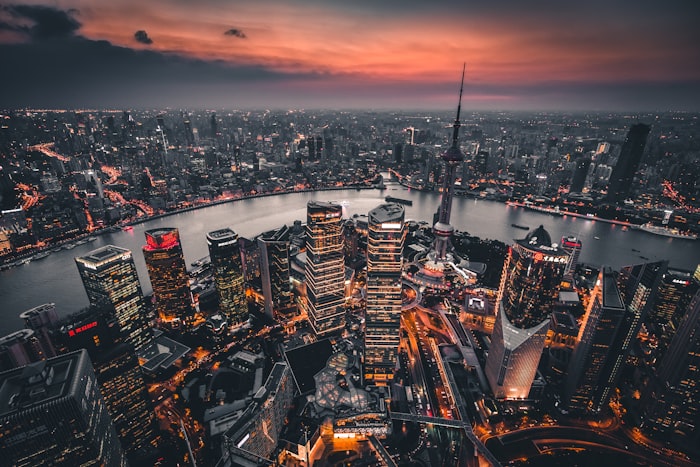
Shanghai
Shanghai Cola Collaboration
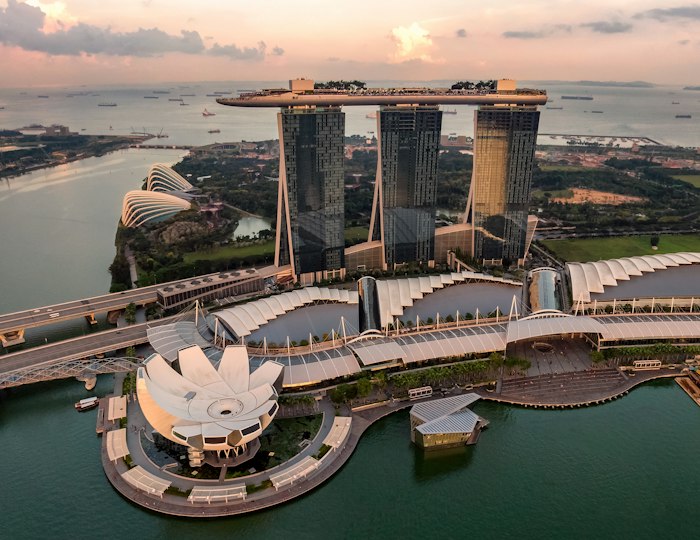
Singapore
Singapore IMBA Global & Tech
Thailand
Thailand Hospitality & F&B
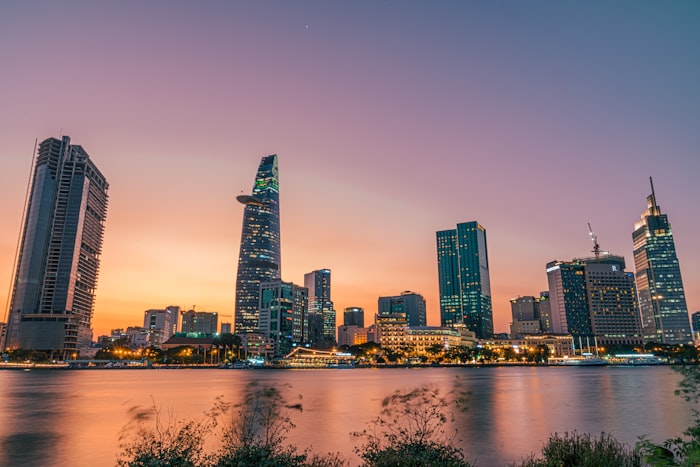
Vietnam
Vietnam Emerging Markets
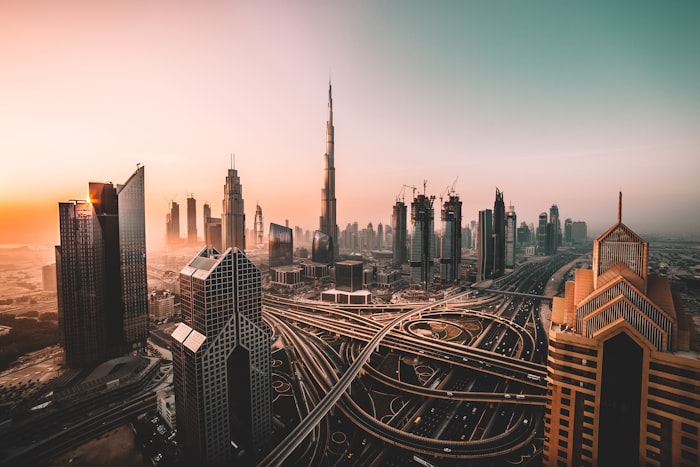
Dubai
Dubai Luxury Hospitality

Twelve years takes you places. We've worked with brands across Hong Kong's art community, collaborated in Shanghai, and most recently been building things across Thailand, Vietnam, and Dubai. Most of it we can't talk about publicly, which is honestly fine. The work speaks to the people who need to hear it.

Hospitality shaped us. The Ritz-Carlton, Westin, a long list of independent hotels and F&B brands that trusted us early. That world taught us something most tech agencies never learn: details matter, experience is everything, and the guest always notices.

But if we're being honest about what's energised us lately: it's IMBA Global.

IMBA Theatre immersive experience ✦ A Friend We Made
IMBA Global · Singapore
Something Singapore hadn't seen before. We're glad we got to help build it.

They didn't pay us to write this. IMBA Theatre is Singapore's first permanent large-scale immersive arts venue: 20,000 sq ft of projection space, a 12,500 sq ft physical gallery, and one of SEA's tallest projection walls at 12.5m. They brought David Hockney's Lightroom to the region for the first time. The people behind it are genuinely wonderful, and working with them reminded us why we love this work.

Visit imbaglobal.com ↗
What makes them special
Art + Tech, Together Digital immersion and real physical masterpieces in the same visit. Not a pop-up. A permanent home.
Spaces That Come Alive Built for exhibitions, performances, and experiences that transform with light and sound.
Global Reach, Local Heart Partners with London's Lightroom and Nanyang Polytechnic in the same breath. That's rare.
Curiosity First "Curiosity makes life richer": not a tagline for them. You feel it the moment you meet the team.
Arts & Architecture

The work that moves us most sits where design, culture, and purpose overlap.

For those who know us, it's no surprise. We've always been drawn to where design meets purpose. Talking late into the night about the structural poetry of SpacecraftBKK, the cultural ambition behind the Singapore Design Centre, or something as quietly radical as Flussbad Berlin: a mission to turn the Spree Canal into a clean, open body of water for everyone.

That kind of thinking gets us out of bed.

Closer to home in Bali, we've had the privilege of being part of Potato Head's world. A brand that turned regenerative hospitality into a genuine philosophy and took home best in the world.

But what moves us most are the smaller names doing quietly extraordinary things. The Jogja art community. And most recently, our dear friends at LucyDream Art.


LucyDream Art, Bali art community ✦ A Project Close to Our Soul
LucyDream Art · Seminyak, Bali
Founded by an artist, for artists. We helped build the digital side of something real.

LucyDream Art is a Bali-based platform giving emerging Indonesian and international artists global reach, and turning that reach into something genuinely good. Their "Seeds for a Child" initiative funds art therapy, life skills, and vocational training for underprivileged kids in Bali. They collaborate with hotels, cafes, and fashion brands. They run exhibitions at Nuanu Creative City and Guru Canggu. They work in acrylic, digital collectibles, pop art, and surrealism. Sometimes in the same room. Building their website was a learning experience for us on its own. Founded by an artist, for the artist community. Salute.

Visit lucydreamart.com ↗
What they do
Artist Empowerment Global exposure for emerging Indonesian and international artists, increasing the value of their work through digital tools and curated exhibitions.
Seeds for a Child Art therapy, life skills, and vocational training for underprivileged children in Bali, funded by the platform's own revenue.
Creative Collaborations Art integrated into hotels, cafes, and fashion brands: on tote bags, shoes, home decor. Art that lives in everyday life.
Physical + Digital Exhibitions at Nuanu and Guru Canggu. Artworks online, from acrylic canvas to digital collectibles (NFTs).

What we believe

Not values we put on a wall. Things we keep arguing about and keep landing on. Some of them might be wrong. We update them when we find evidence.

There's probably a $30/month tool that solves your problem. Let's find out before we build anything.

We have an obvious financial incentive to recommend custom development for every problem that crosses our desk, and we try very hard not to let that incentive do our thinking for us. There is a SaaS product for almost everything now, and many of them are surprisingly good. We would rather spend an hour helping you evaluate existing tools than spend four months building you something that creates permanent dependency on us. This is not generosity. It's self-interest in a longer time frame. The clients who trust that we're honest about build vs. buy are the ones who come back when the problem is genuinely worth building for. And those problems are genuinely more interesting anyway.

The engineers who scope the work should be the engineers who do it. Otherwise something important gets lost.

Here is what happens when you describe a problem to a salesperson, who translates it to a project manager, who writes a specification for an offshore team, who implements the specification without ever speaking to you: something gets lost at every step. The nuance in how you described the problem. The subtext about what actually matters. The implicit constraints that only become visible when a real engineer pushes back. At Vertical Screen, the person you explain your problem to is usually the person who solves it. We've found this produces better architecture, requires dramatically fewer meetings, and results in a final product that feels like someone understood what you were trying to do, because someone did.

Good software gets more valuable over time. It's a design choice, not luck.

There's a pattern in the systems we most admire: they improve with use. Not because someone keeps patching them, but because they were designed to accumulate value. The difference between a system that compounds and one that merely runs is almost entirely architectural. A decision made in the first week, not the last. We try to build the first kind, and we measure whether the systems we've shipped are actually improving. It's embarrassingly easy to tell when they are and when they aren't.

Being small is a philosophy. We are not trying to grow into an agency.

Large teams produce large amounts of coordination overhead, which produces a particular kind of mediocrity. Not bad work, just work that's been averaged across too many opinions and too many handoffs. We stay small enough that every person on a project actually cares about it, actually talks to the client, and actually has skin in whether the thing works after launch. We'd rather do ten things excellently than fifty things adequately. We say no to a fair amount of work. We'd rather recommend someone better suited to a project and stay friends than take the work and disappoint you. Asia is a small world. Reputations travel.

What we're exploring

These are the open questions we're actively working on. Some will become findings worth sharing. Some will dead-end. We publish both, because other people keep running into the same walls.

System Design

What is the minimum viable architecture for a system that actually compounds?

Not every client needs a full data platform with a vector database and a fine-tuning pipeline and a dedicated ML engineer. Most don't. We're trying to identify the smallest architectural footprint that still allows a system to genuinely improve over time: the essential primitives, without the stuff that sounds impressive in a proposal but adds three months to the timeline. We have a thesis. We're testing it on two current projects.

Active experiment
Brand & AI

How do you keep a brand voice coherent when some of the content is written by a machine?

We've been running marketing for enough brands to know that voice consistency is genuinely hard even when humans write everything. Now that AI is in every content workflow, it's harder, and more interesting. We're building a framework for what we're calling "voice infrastructure": a set of constraints, examples, and evaluation criteria tight enough that AI output sounds like the brand, not like a press release. Early results are promising. It's mostly a documentation problem dressed up as a technology problem.

In progress

Brands We Love

Some of the brands we genuinely enjoy working with. Each one taught us something, and we like to think we returned the favour.

Findings

Things we've learned from building and breaking systems. Specific enough to be useful, we hope, because vague lessons are only useful for filling slide decks.

Working Methods Nov 2025

"Weekly demos on working software are better than milestone gates. This is not a close call."

We've run projects both ways. Milestone-gated projects, where you don't show the client working software until a defined checkpoint, produce a particular kind of misalignment that only becomes visible when it's expensive to fix. You can write a perfect spec and still end up building the wrong thing, because the act of seeing something working reveals assumptions that no amount of written specification could surface. We now treat every Friday as a demo day on active projects, even when the thing being demoed is ugly, partial, or embarrassing. Early feedback on ugly things is orders of magnitude cheaper than late feedback on polished things. The clients who appreciate this are the clients we want to work with.

Ask how we work

How we work

Not a methodology deck. Just how projects actually go, described honestly, including the parts that are harder than they sound.

First conversation

We talk about the problem, not the solution. What's actually broken? What does success look like in twelve months, not just at launch? What have you already tried? We're genuinely trying to figure out whether we're the right people for this, and we'll tell you honestly if we're not, usually with a suggestion for who might be better. No pitch decks in this meeting.

Typically 45–60 minutes. Free.
Scoping

We spend real time on architecture before anyone writes a line of code. Data flows, integration points, the places where the system needs to scale and the places where it doesn't. All of this gets decided up front, not patched in later. We produce a clear scope document with explicit tradeoffs documented, so you know exactly what we decided not to build and why. The engineers who scope also build. No handoffs.

Usually a week, sometimes two for complex systems.
Building

Weekly working demos. You see the actual product, not slides representing the product. We share what's going well, what we got wrong, what we changed and why. We prefer early feedback on things that don't look polished yet to late feedback on things that do. Asynchronous by default, synchronous when something actually needs a real-time conversation.

You always have access to the staging environment.
Shipping

Production is where the system starts learning. Every deployment is instrumented. Not because it's industry best practice but because we actually want to know if the thing works. We document the architecture, the decisions made and unmade, and the reasoning behind both, so the next engineer (including us, six months later) understands what they're looking at. No mysteries in the codebase.

We do not disappear after launch.
Long term

Some projects end cleanly. Many become ongoing engineering relationships, which is our preferred outcome. Not because the retainer revenue is nice (though it is), but because the interesting work happens after launch, when real users reveal which of your assumptions were wrong. We measure whether the systems we built are getting better. Not just running. Actually improving. That's the whole point.

Get in touch

Tell us what you're actually trying to do.

We read every brief ourselves. You'll hear back from an engineer within a business day. Not an automated response, not an account manager, just someone who read what you wrote and thought about it. If we're not the right fit, we'll say so, and we'll usually suggest someone who is. We find that people appreciate the honesty even when it's not the answer they hoped for.

Based in Bali · Singapore · Bangkok · Jakarta. Remote-first
Response time Within 24 hours on business days
Best fit Problems with real constraints, not unlimited budgets
Worst fit Teams who need 200-person enterprise vendor support

No automated responses. No sales follow-up sequence. No one will call you to "discuss your options." An engineer reads what you wrote and responds to it honestly.