
How AI Is Impacting The Marketing Industry
What brands embracing generative technology can teach us.
For decades, marketers have adapted to new technologies, from television and radio to social media, but few innovations have triggered as much disruption and debate as generative Artificial Intelligence (AI). Once considered an experimental novelty, it is now being integrated into core marketing functions, reshaping how campaigns are conceived, produced, and delivered.
Yet alongside its rapid adoption lies an undercurrent of unease: a stigma around using AI for creative work, fears of professional displacement, and mounting pressure to prove the "human touch" still matters.
With the AI-in-marketing market projected to reach $217.3 billion by 2034, conversations about its role in shaping the industry are only intensifying.
The Creative Shift
Generative AI has expanded what's possible in marketing. Brands are no longer constrained by lengthy production cycles or resource-heavy creative processes. Tools like OpenAI's ChatGPT (reportedly used by over 700 million people weekly), MidJourney, Claude and DALL·E can generate copy, visuals, scale emailing and creative concepts in minutes.
For marketers, generative AI is less about replacing creative work and more about expanding its boundaries. But the perception isn't always so straightforward.
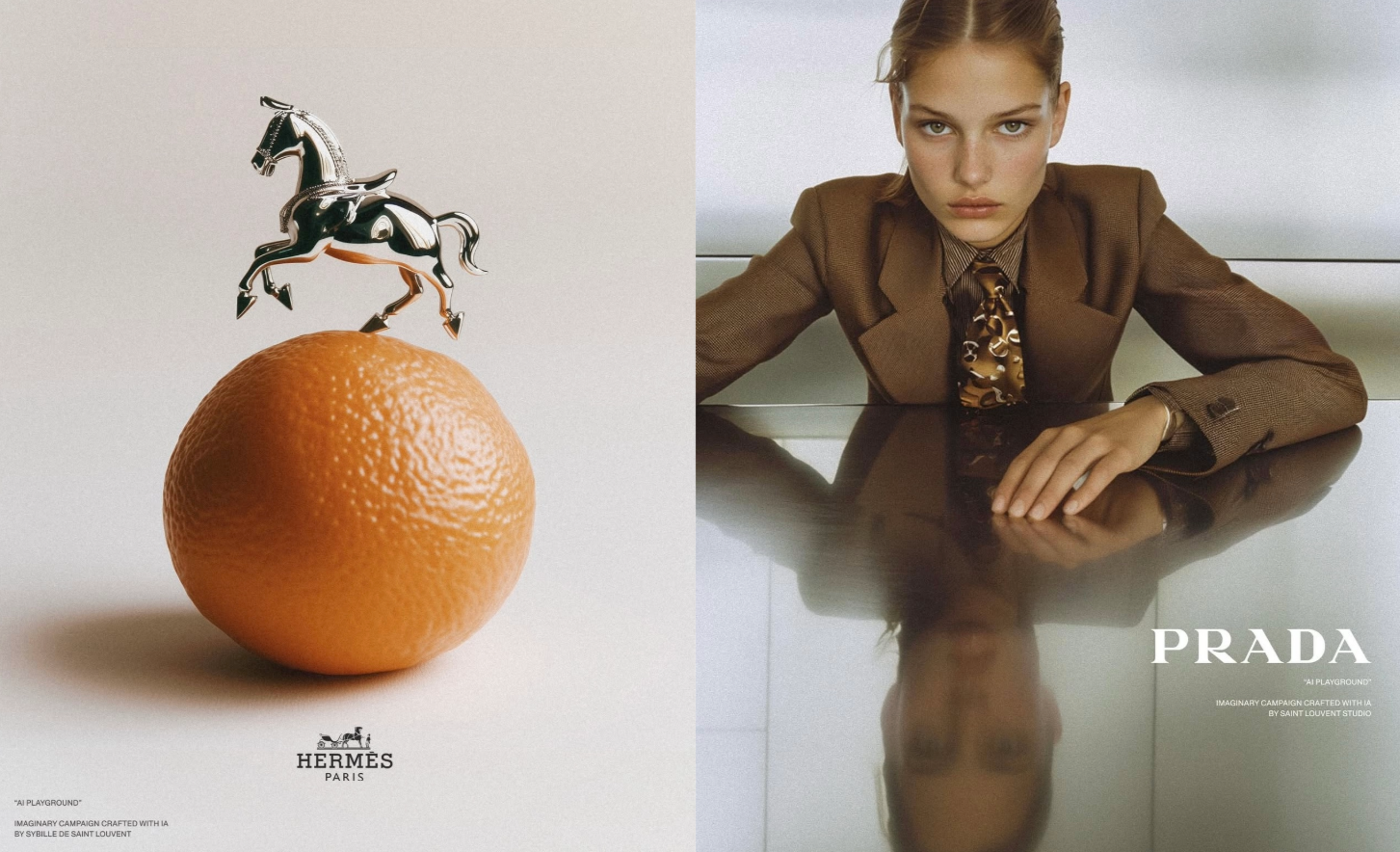
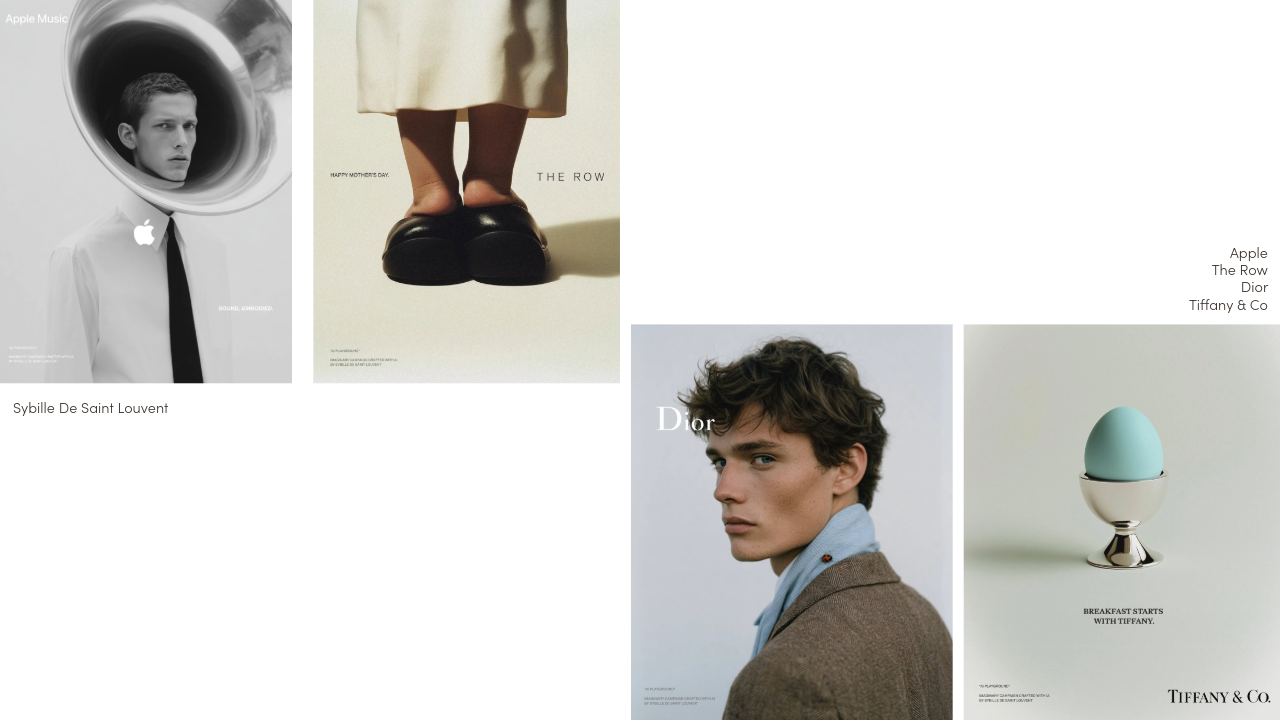
On Instagram, independent creative director Sybille de Saint Louvent illustrates how AI can empower creatives rather than replace them. Creating campaigns for brands including Prada, The Row, Gucci, and Hermès, she integrates AI into her artistic practice to produce visually striking campaigns, even landing paid partnerships built on her AI-enabled style.
Ethical Questions and Concerns
However, the rise of AI in creative production has sparked heated debates. Agencies worry campaigns may be dismissed as inauthentic or derivative, while consumers remain skeptical of content created entirely by machines.
This stigma has forced brands to carefully frame AI as a 'collaborative tool.' When highlighted in campaigns, AI is often presented as an experiment, with humans steering the creative process.
Fashion retailer H&M recently faced scrutiny after revealing its use of AI-generated "digital twins" of professional models. In a statement, the company described the initiative as an exploration of new creative territory, emphasising that each model retains control over their digital likeness.
H&M's Chief Creative Officer, Jörgen Andersson further argued:
"We're exploring emerging technologies like generative AI to amplify creativity and reimagine how we showcase fashion… it is simply another tool for creatives."
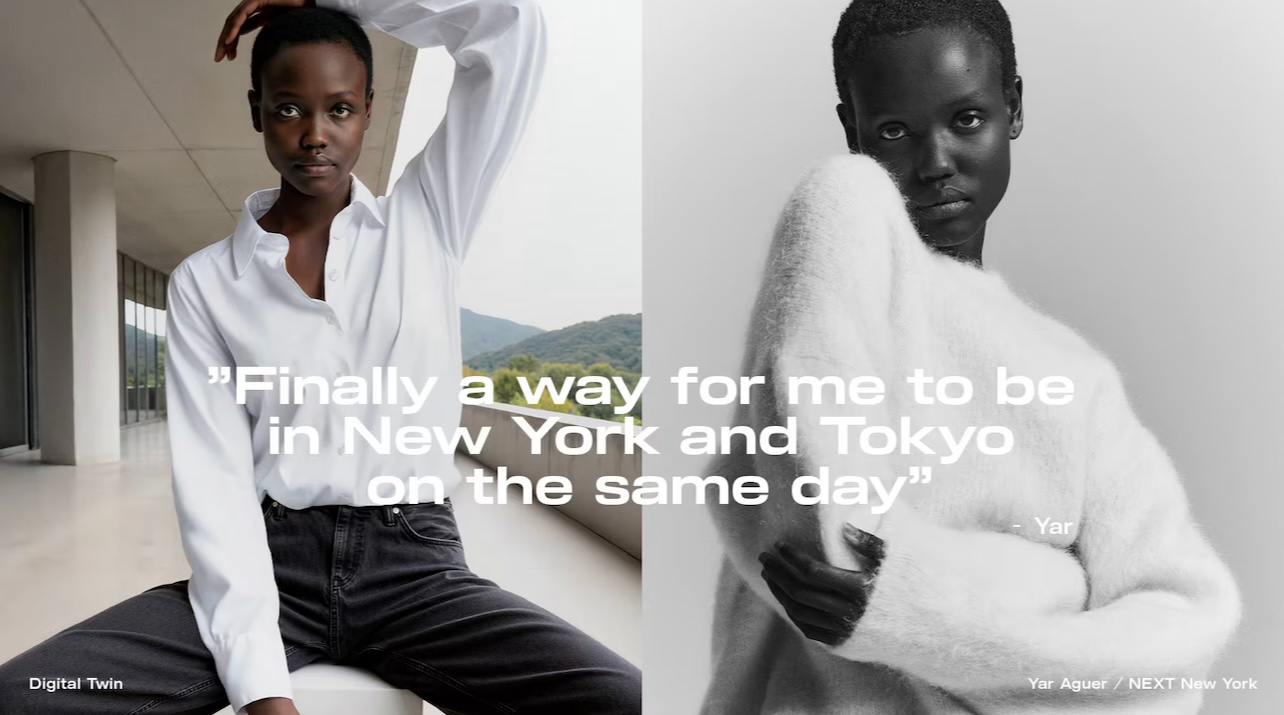
The backlash underscores the argument that AI can streamline efficiency, but authenticity remains paramount to consumers.
The Human Proof Point
Paradoxically, as AI becomes more advanced, the demand for human authenticity has only naturally grown. Consumers want honesty: the sense that a brand is speaking with a real voice and values.
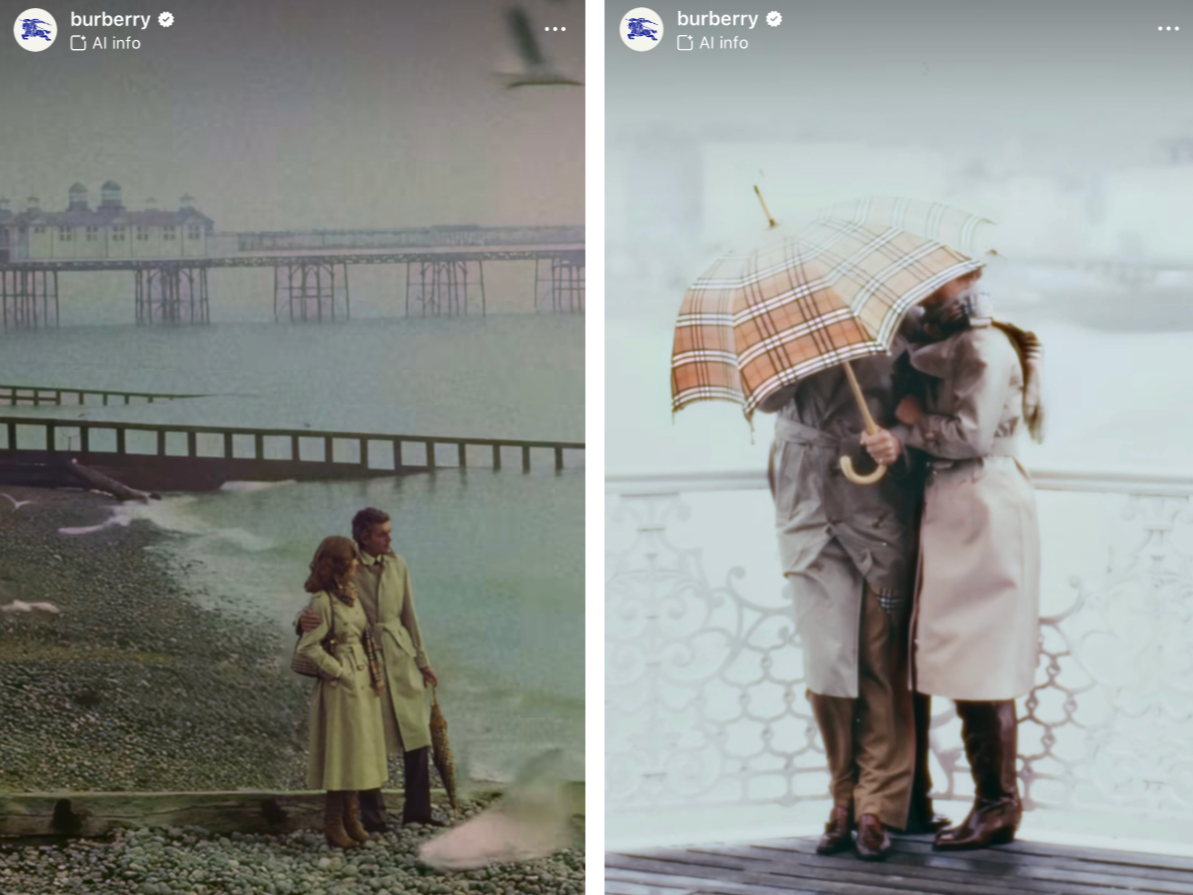
Marketers are responding by adopting hybrid practices. Some disclose when AI is used in creative development, positioning transparency as a trust-building measure. Others deliberately juxtapose AI-generated assets with behind-the-scenes human input, reminding audiences that technology enhances but does not replace imagination.
Increasingly, the "human element" itself has become a brand asset, proof of originality, empathy, and judgment in an automated age.
The Future Of AI In Marketing
The pressure to assert human creativity will continue to shape AI adoption in marketing. But the most successful brands will be those that find equilibrium: using AI to scale efficiently while foregrounding the irreplaceable qualities of human storytelling, ethics, and emotional intelligence.
Generative AI may take over repetitive tasks, drafting ad variations or analysing campaign performance, but brand equity and storytelling, strategy, and audience understanding remain uniquely human domains.
For marketers, the future lies not in resisting AI, but in learning how to revolutionise the industry with human insight and direction.
The real competitive edge will come from investing in creativity, not just technology.