
The New Luxury Is Imperfection
On choosing print, embracing the physical, and what happens when brands build at the speed of craft instead of content.
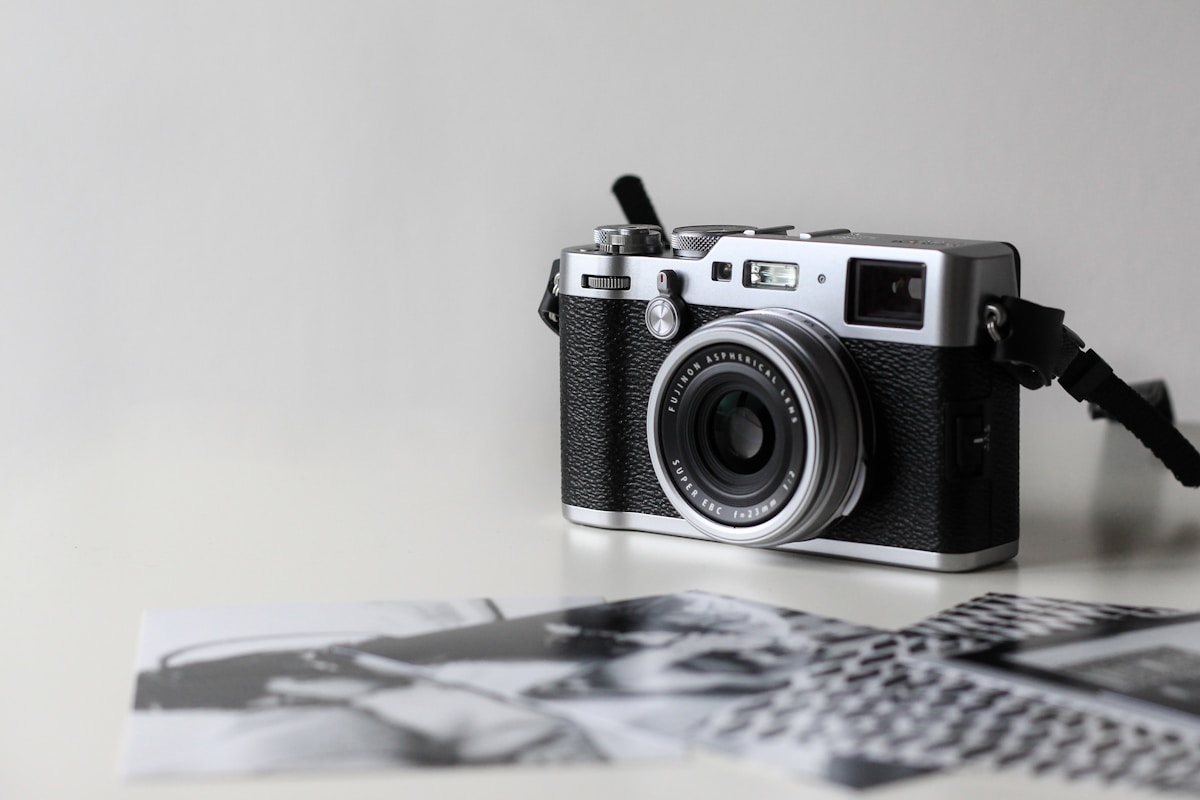
Across the brands I work with, and honestly across my own feeds too, I keep noticing the same shift. The brands thriving right now are redirecting resources from high-volume digital content to fewer, higher-craft outputs. They are structuring product development around analog processes that cannot be easily replicated.
It is not just changing what gets posted. It is reshaping where production budgets go, how content strategies get built, even what products get developed. This is not about being anti-digital or romanticizing analog for its own sake. It is about understanding that when everyone has access to the same platforms, the same influencers, and the same AI tools, the only real differentiator left is choosing craft as constraint. That choice cascades through every part of how a brand operates, from what it makes, to how it talks about it, to whether it talks about it at all.
Print as premium positioning
Take Kraum, the beauty brand. It has done something almost unheard of in 2025: shipped a bound user's manual. An actual printed booklet that arrives with the brush collection, detailed, meant to be used and seen. Founder Annie Kreighbaum collaborated with a designer she had previously worked with on early Glossier packaging, writing and illustrating the 40-page manual herself, citing 1990s and 2000s Chanel makeup diagrams as inspiration.
I love designing physical ephemera. Doing things digitally all the time is soul-sucking. When you are watching a tutorial online, you are going at the pace of the person you are watching. Information is all bite-sized, and if you cannot keep up, you have to actively press buttons to go at your own pace.
Annie Kreighbaum, founder of Kraum
The strategic rationale is clear. In a market saturated with ephemeral digital content, print signals commitment. It occupies physical space in your home. It cannot be updated, deleted, or buried by an algorithm change. For a premium brand targeting people fatigued by endless scrolling, it is differentiation through permanence.
Heritage luxury has always understood that scarcity drives desire. Now direct-to-consumer brands built on digital-first strategies are reverse-engineering that logic. Less content, more craft. Fewer touchpoints, higher quality. Smaller communities, deeper investment.
The Bottega playbook: how silence became strategy
Bottega Veneta deleted its Instagram in 2021. Four years later it is outperforming most luxury houses that never left.
No Instagram, no Facebook, no Twitter in Western markets. So how do you build engagement without feeding the algorithm? According to tracking from databutmakeitfashion, Bottega Veneta's popularity surpassed other high-fashion brands by 70% in late 2024, driven entirely by earned media, celebrity partnerships, and user-generated content. A$AP Rocky in paparazzi-style shots. Jacob Elordi carrying bag after bag, without Bottega posting any of it. Ambassadors and fans do the work.
While parent company Kering's revenue fell 16% year over year in 2025, Bottega delivered growth, driven by directly operated stores and a brand position that feels genuinely scarce in an over-saturated market.
The semiotics matter. In a category where every brand optimizes for daily engagement, Bottega's absence reads as confidence. As not needing you to notice. Which makes people notice in new ways.
Who else is mastering the disappearing act
Bottega is not alone. Loro Piana has operated on similar logic for decades: minimal logo presence, near-zero marketing, cult loyalty among those who know. Brunello Cucinelli built a company on humanistic capitalism and controlled growth that prioritizes craft over scale.
The more interesting movement is happening at accessible price points. Brands like Toteme, Khaite, and Lemaire show you do not need heritage or five-thousand-dollar price tags to execute this position. You need clarity about who you are for. Toteme generated 150 million dollars in revenue last year with virtually no traditional advertising. Its T-Lock bag became a cult object through insider knowledge. Fashion people recognize it instantly, but it carries no logo. Demand for Toteme bags on The RealReal rose 851% year over year.
When we launched, no one was asking for quiet luxury. It was all about influencers and Instagram. But we were sure there were enough women around the world who wanted this style.
Elin Kling, co-founder of Toteme
Why analog is the new premium signal
Film photography. Illustration. Image scans. These are not aesthetic choices divorced from strategy. They are visual signals that communicate something specific: this was not optimized. Someone was present enough that perfection became secondary.
In a landscape where AI has broken any reliable relationship between image and reality, analog imperfection is the proof that a human was actually there. That the moment existed in physical space, made by an artist with an identity, a direction, and craft in the work.
You can see it in recent campaigns. Tekla built holiday scenes almost entirely out of paper craft. Rimowa worked with an illustrator to blend 2D elements and 3D objects into a short film. Artists like Jasmine Dowling physically deconstruct frames, press flowers, photograph designs frame by frame, and scan them, creating artifacts you cannot fake with a prompt. You see the layers. The hours. The choices. Brands want that on their pages, and Dowling's recent client list runs from Hermes to Aesop to Gucci.
What this means for brand building
Production budgets shift from high-volume digital content to fewer, higher-craft outputs. Analog processes. Print. Physical touchpoints that cannot be easily replicated.
Community metrics shift from horizontal to vertical. From follower count and reach toward comment quality, repeat purchase, and advocacy rate. Building for a thousand people who genuinely care rather than a hundred thousand who scroll past.
Distribution prioritizes owned channels and organic advocacy over paid acquisition. Scarcity becomes a growth lever rather than ubiquity.
The most interesting part is not that this works for old houses with decades of equity to leverage. It is that emerging brands with no legacy are using the same playbook and seeing measurable results. New brands are choosing analog processes and strategic silence from day one, building in a sense of age and heritage from the start.
When AI can generate infinite perfect images at near-zero cost, the work that requires human hands, time, and craft becomes the defensible differentiator. Film photography, hand-cut collage, bound print materials. They carry value precisely because they cannot be automated or replicated at scale.
This is not a temporary trend or a luxury-specific phenomenon. It is a shift in how premium brands will need to operate when visibility stops equating to value.