
Can AI Make an iPhone?
Generating 80 concepts was never the hard part. Benn Stancil on taste, discipline, and whether a model built to please us can ever say no.
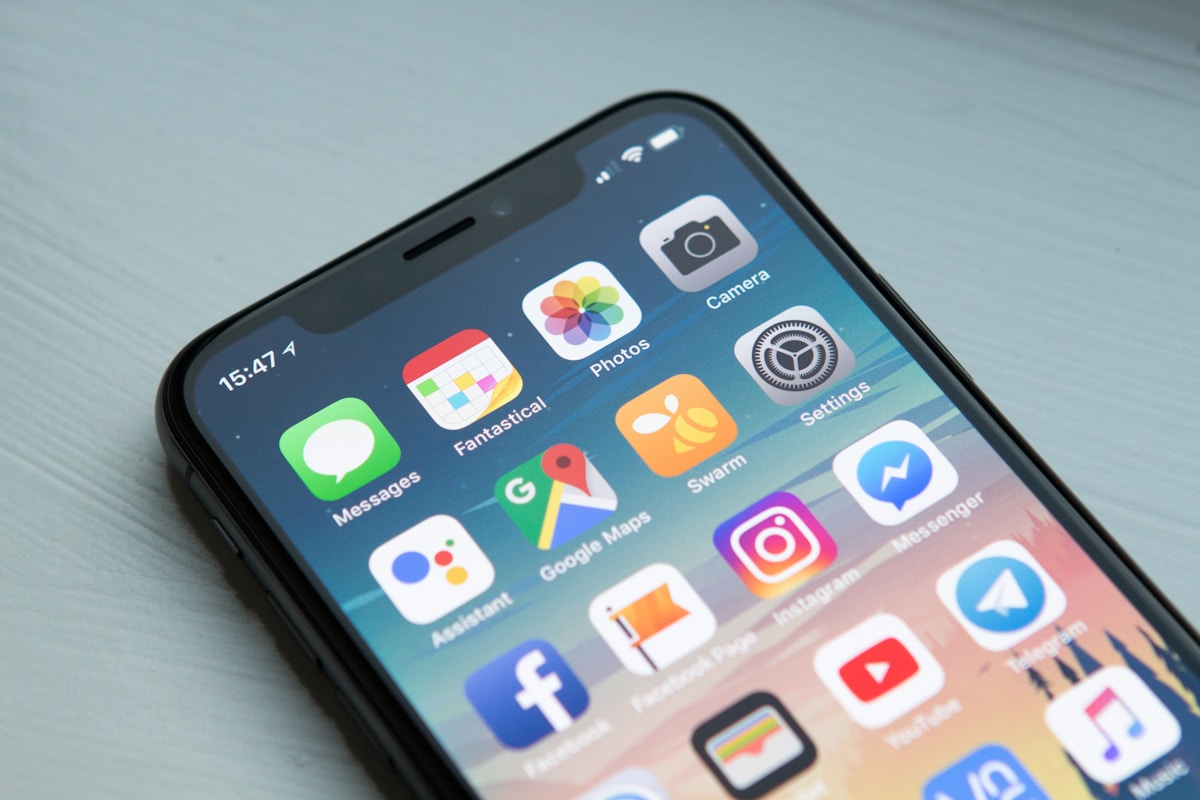
Suppose it is 2004, and you are sitting in a neon white conference room with Steve Jobs. He has a dream: an iPod, a phone, and an internet communicator, all in one device. There is an array of inspiration on the table in front of you: an iMac, a PowerBook, a Nokia 3310, a Game Boy, a Sega Genesis, a stand mixer, a book of matches, a Shelby Cobra, a Phillips-head screwdriver, a four iron, a tire. "These are all excellent devices," says Steve Jobs. "One day, our device must be on this table too. It must be simple, beautiful, and powerful. You can design anything you want, and an army of the world's best industrial engineers will hammer it into the world."
What would you have made? Could you have invented the iPhone?
Suppose it is 2005, and you are in the same room. Jobs is an overheated balloon, stressed and hot and one sudden move from combusting. Jony Ive walks to the head of the table. "This device will not just be an iPod, a phone, and an internet communicator," he says. "This device will be a revolution of craftsmanship. It will be mathematically precise and yet as singular as the palm of your hand. It will be machined from flawless glass, stitched into a carbon alloy frame that is impossibly lightweight and perfectly forgiving. When you hold it, you will not see a device, but form, function, Madame Butterfly, and a place where we know we are loved."
"Ok but what is it?" says Steve Jobs.
"I have no idea," says Jony Ive. "But ten of us did a Crazy 8's design sprint and we came up with 80 different concepts. There is no way form, function, Madame Butterfly, and a place where we know we are loved isn't in at least one of them."
Jony Ive pulls out a poster of 80 different iPhones. Steve Jobs explodes. The rest of the room turns to you. If the actual, original iPhone was among those 80 ideas, along with the other 79 that people might have come up with in 2004, would you have picked the iPhone? Or would you have picked something else?
Suppose it is 2006, and you are sitting with a reconstructed Steve Jobs. Machinists have been milling perfect glass and stitching it into a carbon alloy frame, but unfortunately, it is not impossibly lightweight and perfectly forgiving. It is heavy, or it is fragile. "We have to choose one," the material engineer says, "or spend way more money to keep researching new ways to make it."
A software engineer gives the next update. "It's this one big button," she says. "You cannot do so much with one button. We have many wonderful apps, but they are hard to use with just one button. If we added just two more buttons, a left arrow and a right arrow, still only three buttons, still 32 fewer keys than a BlackBerry, we could multiply how much we can do. That's still pretty good, right?"
What would you have said? Would you have said no, or talked about tradeoffs, impossible trinities, business needs, and compromise?
The hardest question is the third one
Initially, the first question seems easy: no, definitely not. If you could have invented the iPhone, you would have invented the iPhone. The second question seems harder; most of us have no idea how well we would do at choosing the design that Steve Jobs actually chose.
But the first answer may not be true, and the second question may not matter. Because the most important question, and the hardest one to get right, is the third one.
Could the iPhone have been the iPhone with any of the alternative designs? Who knows, but probably. More critically, creating something is not a singular act; it is a repeated one. And most of us get lost in that repetition. We start with something simple and elegant, but either lack the restraint to keep it that way, or the willpower to keep hammering down every edge. We get tempted by tradeoffs, shortcuts, and shiny new possibilities. We get tired. We add more buttons, and more menus.
Perhaps we could have identified the iPhone, and maybe we could even have imagined it. The reason nobody else invented the iPhone is that nobody else had the discipline to insist that it stay an iPhone.
Now ask the same question about AI
It is 2026, so the question is no longer whether we could build an iPhone. It is whether AI could, and, more generally, whether AI can make something great.
A viral new company called Taste Labs says yes:
"AI has made it easy to generate anything. The challenge is knowing what to make. And how to make it great. Our mission is to create models and agents that produce not just outputs that are correct, but that feel right. We're making the unverifiable verifiable, starting with design."
Taste Labs
The idea is simple enough. Most AI models are reinforced by human judgments: a chatbot gives you two answers, you pick your favorite, and that vote nudges the model toward answers like it. Taste Labs, by contrast, is selective about its judges. It uses a "curated community of tastemakers" to score its outputs, and the theory goes that this makes the model act more like an expert than an everyday philistine.
On one hand, it is an easy company for the internet to get mad about: Silicon Valley, once again attempting to quantize the soul; AI, continuing its march through the job market. On the other hand, it is built on a fairly unremarkable goal: make the models that billions of people already use better at making stuff people like.
You have to wonder, though: does that work against the mission of making things more tasteful? Because good stuff (the iPhone, but also good websites and good emails and good presentations) is as much about subtraction as addition. Good stuff comes from hard choices and painful limitation; from killing your darlings; from having more time to write a shorter letter. No matter how tasteful the mocks, the final product can still be a mess, unless the model also tells us no. And we do not like the models that tell us no.
Tellingly, there is a little game at the bottom of Taste Labs' website. A handful of designs are presented in a grid; you choose the ones you like and the ones you don't. After a few selections, the game tells you, no matter what you chose, that your taste rocks.
Taste Labs clearly does not believe this. The entire premise of the company is that only certain people have taste that rocks. But the company is a business, and people like to be told yes. It is not a coincidence, after all, that Steve Jobs is known for two things: making great stuff, and being an absolute tyrant.
Notes
- Apple's alternative iPhone designs survive in court exhibits, so we can still see the contemporaneous options. It raises a question: a model trained only on data up to 2004 might reasonably approximate what people imagined a phone could look like in 2005. Could AI work as a kind of counterfactual machine?
- If curated judges work, the major labs could embed the same selectivity in their own reinforcement learning: identify which users are actual designers, ask them for opinions more often, and overweight their judgments. Which may mean Taste Labs is selling less of a product to customers and more of a research technique, and eventually a company, to an AI lab.